



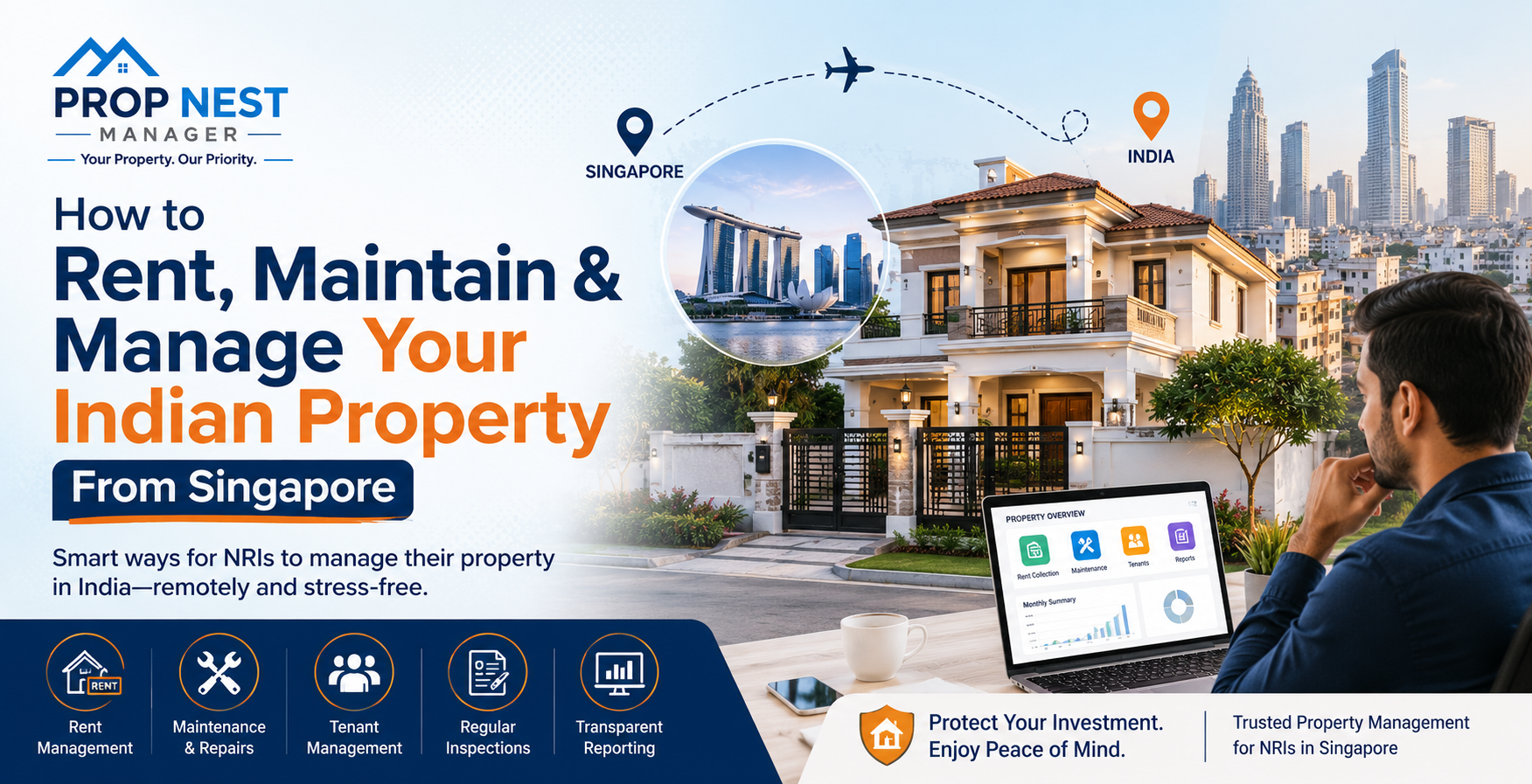

Living in Singapore while owning a property in India can be a valuable investment, but managing that property from another country can also be challenging. Finding reliable tenants, collecting rent, handling repairs, paying bills and keeping track of documentation can become difficult when you are thousands of kilometres away.
Fortunately, with the right planning and a reliable NRI property management service, you can manage your Indian property remotely with much less stress.
This guide explains how NRIs in Singapore can effectively rent, maintain and manage their property in India.
Why Is Managing Indian Property From Singapore Challenging?
Distance is one of the biggest challenges for NRI property owners.
A property may require regular attention for:
- Finding and screening tenants
- Rental agreements and documentation
- Rent collection
- Property inspections
- Plumbing and electrical repairs
- Cleaning and maintenance
- Utility bills and property-related payments
- Lease renewals
- Handling tenant complaints
- Vacating and handover procedures
When you are living in Singapore, travelling to India every time something needs attention is not practical. This is where professional property management can provide valuable support.
1. Decide Whether You Want to Rent Out the Property
The first step is deciding whether your Indian property should be rented out.
If the property is vacant for long periods, renting it can potentially generate regular income while keeping the property occupied and maintained.
Before renting, consider:
- The property’s location
- Current rental demand
- Expected rental income
- Property condition
- Furnished or unfurnished requirements
- Suitable tenant profile
- Local rental market conditions
A professional property manager can help you understand the local rental market and position your property appropriately.
2. Prepare Your Property for Tenants
Before advertising your property, make sure it is ready for occupancy.
Check:
- Electrical systems
- Plumbing
- Air conditioning
- Water supply
- Doors and windows
- Kitchen appliances
- Furniture, if furnished
- Paint and flooring
- Lighting
- Security systems
Small maintenance issues are often easier and less expensive to address before a tenant moves in.
A professional property management company can arrange inspections, cleaning and necessary repairs on your behalf.
3. Find and Screen Reliable Tenants
Finding a tenant is easy; finding a reliable tenant is more important.
Your property manager can help market the property through appropriate channels and coordinate enquiries and property visits.
Tenant screening may include reviewing:
- Identity documents
- Employment details
- References
- Rental history
- Other relevant tenant information
The objective is to find a tenant who is suitable for the property and likely to follow the terms of the tenancy agreement.
4. Set the Right Rental Price
One common mistake made by property owners is setting the rental price based only on personal expectations.
Rental values can change based on:
- Location
- Property size
- Building amenities
- Furnishing
- Nearby schools and offices
- Transport connectivity
- Current demand
- Comparable properties
A local property management professional can help you understand the market and determine a competitive rental price.
Setting the right price can help attract suitable tenants while reducing unnecessary vacancy periods.
5. Complete Proper Rental Documentation
Once you have selected a tenant, make sure the rental arrangement is properly documented.
Depending on the property and circumstances, documentation may include:
- Tenancy agreement
- Tenant identification documents
- Deposit details
- Rent payment terms
- Maintenance responsibilities
- Notice period
- Lease duration
- Property inventory, where applicable
Clear documentation helps both the property owner and tenant understand their responsibilities.
For NRIs, having a trusted representative in India can make documentation and coordination considerably easier.
6. Collect Rent Without Being Physically Present
Rent collection can become difficult when you are living overseas.
Instead of relying on informal arrangements, establish a clear and documented payment process.
Your property manager can assist with:
- Monitoring rent payments
- Following up on delayed payments
- Maintaining payment records
- Providing regular statements
- Communicating with tenants regarding payment matters
This allows you to monitor your rental income from Singapore without having to manage every payment personally.
7. Keep Your Property Maintained
Regular maintenance is essential for protecting the long-term condition of your property.
Common maintenance requirements include:
- Plumbing repairs
- Electrical work
- Painting
- Air-conditioning servicing
- Appliance repairs
- Pest control
- Cleaning
- Water leakage checks
- General repairs
A local property manager can coordinate with technicians and contractors when an issue occurs.
For larger repairs, you can establish an approval limit so that routine maintenance can be handled quickly while major expenses require your approval.
8. Conduct Regular Property Inspections
Property inspections can help identify issues before they become expensive problems.
When you live in Singapore, physically inspecting your Indian property may not be possible on a regular basis.
A property management company can coordinate periodic inspections and provide updates about:
- Property condition
- Maintenance requirements
- Tenant concerns
- Damage or wear and tear
- Cleanliness
- Repairs required
Photos or videos can also provide remote visibility into the condition of the property.
9. Manage Tenant Communication
Good communication is essential for maintaining a healthy landlord-tenant relationship.
Tenants may need assistance with:
- Maintenance requests
- Repairs
- Utility-related questions
- Lease renewals
- Property access
- General concerns
If the owner is based in Singapore, having a local property manager as the primary contact can make communication faster and more convenient for both parties.
10. Handle Lease Renewals
When a tenancy period is coming to an end, you need to decide whether to renew the lease or find a new tenant.
A property manager can help with:
- Monitoring lease expiry dates
- Communicating with the tenant
- Reviewing current rental market conditions
- Negotiating renewal terms
- Preparing documentation
- Coordinating property inspections
Starting the renewal process early can help reduce unnecessary vacancy.
11. Manage Vacant Properties
Vacant properties require attention too.
An empty property can develop problems such as:
- Dust accumulation
- Water leakage
- Electrical issues
- Pest problems
- Security concerns
- Damage caused by prolonged neglect
Regular inspections and preventive maintenance can help keep a vacant property in good condition.
If you are living in Singapore, appointing a local representative or professional property manager can be especially useful for monitoring vacant properties.
12. Keep Your Property Documents Organised
NRI property ownership involves various documents and records.
Maintain organised records of:
- Property ownership documents
- Rental agreements
- Rent receipts
- Maintenance bills
- Tax-related documents
- Utility payments
- Insurance documents
- Property inspection reports
Digital records can make it easier to access important information while you are living overseas.
For tax, legal or regulatory matters, consult an appropriately qualified professional because requirements can depend on your individual circumstances.
13. Understand Your Tax and Financial Responsibilities
Rental income from Indian property can have tax implications, particularly for NRIs.
You should understand your responsibilities regarding:
- Rental income
- Tax deductions
- TDS requirements where applicable
- Property-related expenses
- Annual tax filing
- Repatriation of funds
Tax rules can change and depend on individual circumstances, so it is advisable to consult a qualified tax professional familiar with NRI taxation.
14. Consider Professional NRI Property Management
If you live in Singapore and have limited time to manage your Indian property, professional property management can simplify the process.
An experienced property management company can potentially handle:
Tenant Management: Finding tenants, communication and lease coordination.
Rent Collection: Monitoring payments and maintaining rental records.
Property Maintenance: Arranging repairs, inspections and regular upkeep.
Documentation: Helping coordinate tenancy-related paperwork.
Property Inspections: Providing updates about your property’s condition.
Lease Renewals: Managing communication and renewal processes.
Vacancy Management: Monitoring and maintaining the property when it is unoccupied.
The key is to select a company with transparent processes, reliable communication and experience working with NRI property owners.
How to Choose the Right Property Management Company in India
Before hiring a property manager, ask the following questions:
- How long have you been managing properties?
- Do you have experience with NRI property owners?
- What services are included in your management package?
- How do you screen tenants?
- How do you handle maintenance emergencies?
- How frequently do you inspect properties?
- How do you collect and report rental payments?
- Will I receive regular property updates?
- Are there additional charges for maintenance or tenant placement?
- What happens when a tenant leaves?
- How are major repairs approved?
- How can I contact your team from Singapore?
A clear answer to these questions can help you compare property management providers more effectively.
Benefits of Managing Your Indian Property Professionally From Singapore
Professional management can offer several advantages to NRI property owners.
Convenience
You don’t have to coordinate every tenant request, repair or inspection from another country.
Better Tenant Management
A local professional can communicate with tenants and address routine issues promptly.
Regular Property Monitoring
Inspections and maintenance can help keep the property in good condition.
Reduced Vacancy
Professional rental marketing and lease management can help reduce unnecessary vacancy periods.
Transparent Reporting
Regular reports can help you stay informed about rent, expenses and property maintenance.
Peace of Mind
Perhaps the biggest advantage is knowing that someone trustworthy is looking after your property while you are in Singapore.
Final Thoughts
Managing an Indian property from Singapore doesn’t have to be complicated. With proper planning, clear documentation, reliable tenants and regular maintenance, NRIs can effectively manage their property remotely.
However, handling everything yourself from another country can become time-consuming. A professional NRI property management company can act as your local partner, helping with tenant management, rent collection, maintenance, inspections and other day-to-day responsibilities.
If you are an NRI living in Singapore and looking for a convenient way to rent, maintain and manage your Indian property, working with a reliable local property management partner can help you save time and protect your investment.
Prop Nest Manager helps property owners manage their properties with professional support covering tenant management, rent collection, maintenance, inspections, property marketing and other property-related services.
Frequently Asked Questions
Q1. Can I manage my Indian property while living in Singapore?
Yes. Many property-related activities can be managed remotely with digital communication, online documentation and the support of a trusted local property manager.
Q2. How can I rent out my Indian property from Singapore?
You can work with a local property management company to market the property, coordinate tenant enquiries, conduct property visits, screen tenants and manage the rental documentation.
Q3. Who will handle maintenance if I live in Singapore?
You can appoint a trusted property manager or authorised representative to coordinate maintenance, repairs and inspections on your behalf.
Q4. Is professional property management useful for NRIs?
Yes. Professional management can reduce the challenges of handling tenants, rent collection, maintenance and inspections from overseas.
Q5. How often should my Indian property be inspected?
The appropriate frequency depends on whether the property is occupied, vacant or undergoing maintenance. Regular inspections can help identify potential problems early.
Q6. How can I monitor my property from Singapore?
You can request regular reports, inspection updates, photographs, maintenance records and rental statements from your property management company.
Q7. What should NRIs consider before hiring a property management company?
Consider the company’s experience, NRI services, tenant screening process, maintenance support, communication, reporting, fees and agreement terms before making a decision.





Leave a Reply